

Bulk bags for chemicals and manufacturing
Bulk bags to your plant’s specification, with the spouts, liners and seams you name.
Also for Plastics processing · Mineral processing
Specialist bag types
Start from your specification

Type C bulk bags
Fabric woven with conductive threads and fitted with an earthing tab, quoted to the Type C construction your site specifies, with documentation confirmed before order.
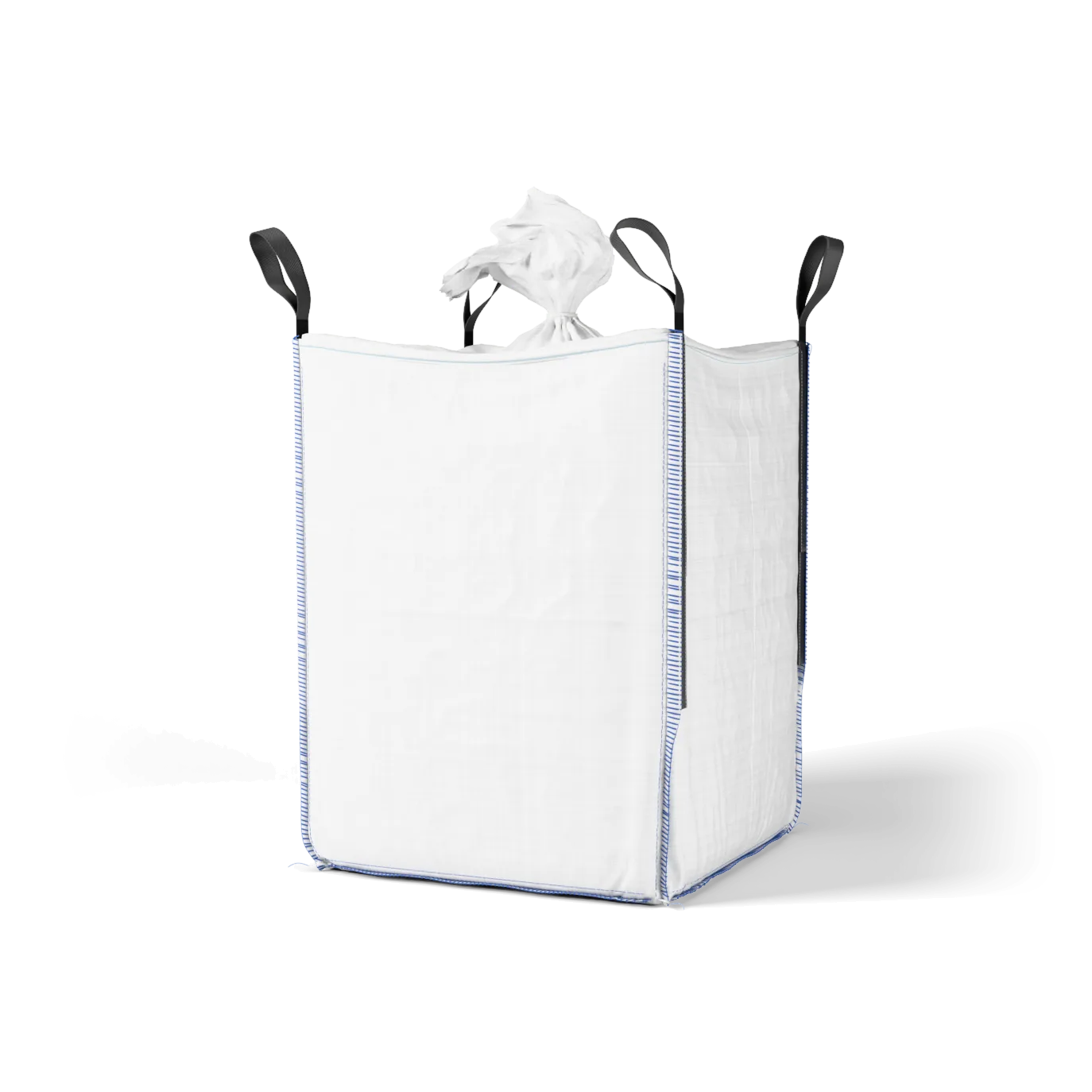
UN bulk bags
Dangerous goods bulk bags quoted strictly to the tested UN design your site specifies, with the design’s approval documentation confirmed before order.
Coated and sift-proof bags
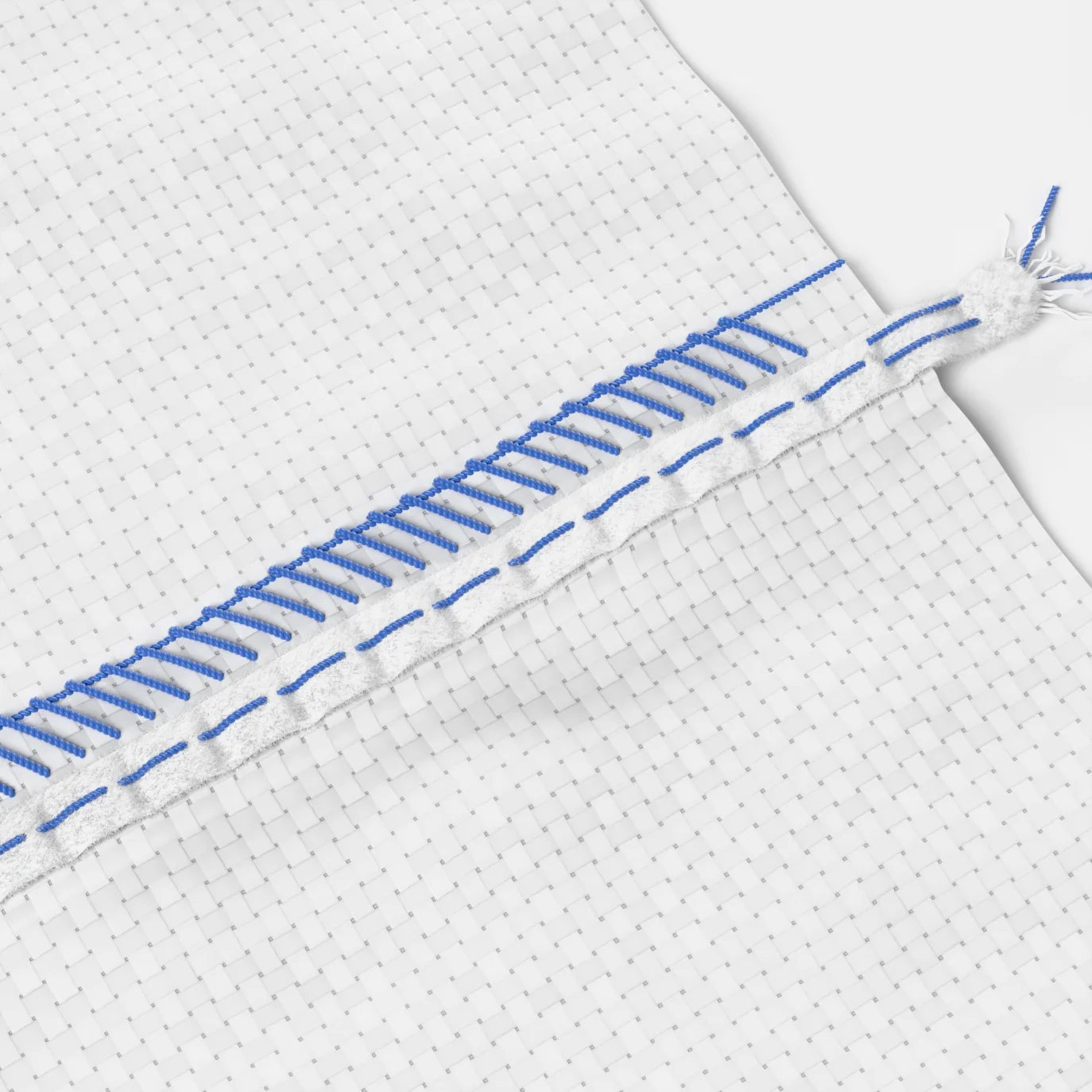
Coated fabric closes the weave, and sift-proof seams are sewn over a filler cord for fine powders. A liner is a separate inner bag of film, quoted with the outer bag.
Construction comparison
Coated fabric, sift-proof seams and liners
These three constructions solve different problems on the bag and can be specified separately or together.
FABRIC LAMINATE
Coated fabric
A thin polypropylene film laminated to the woven outer body so air and fine material cannot pass through the weave itself.
- Where it acts Across body panels and woven top/base
- Seams Pair with filler cord if fine powder can sift through stitch holes
- Typical role Reducing damp pick-up through the weave
SEWN STITCHING
Sift-proof seams
Soft filler cord sewn along the stitch lines to block needle holes where fine powders would otherwise escape during filling.
- Where it acts Vertical corner seams, base seams and spout joins
- Formats Single, double or triple felt-cord options
- Combined with Coated fabric for fine unlined powders
INNER FILM BAG
Polythene liner
A separate tubular or form-fit inner polythene bag inside the outer FIBC, quoted and checked together with the outer bag construction.
- Where it acts Full continuous enclosure around contents
- Fixing Loose, tabbed, sewn in or tied into spouts
- Static check Assessed together on Type B / C / D bags
Specification brief
What to send with your specification
Share whichever details you have to hand, and we’ll work through the rest with your team before quoting.
01 / CURRENT BAG
The bag you use now
Its specification sheet, a photo of its label, or its dimensions. A rough description is enough to start.
02 / OPENINGS
Top and base
The filling spout, skirt or open top, and the discharge spout or flat base, with each spout’s diameter and length.
03 / CONTAINMENT
Fabric and seams
Uncoated or coated fabric, and whether the seams need filler cord for sift-proof containment.
04 / LINER
Liner
None, loose or form-fit, and how it is fixed into the bag.
05 / STATIC & UN
Static control or UN
Let us know if your site specifies Type B, C or D static protection or a UN design so we quote the right construction. See standards and load ratings.
06 / LOAD & QUANTITY
Load and quantity
The fill weight from your specification, and roughly how many bags you need.
Written trade quotes
We quote against your bag specification
We reply within one working day.
Or call our sales team
FAQs
Can you quote against our existing bag specification?
Yes. We can work from the bag specification your team uses now and quote for the proposed construction. You can also start with a rough description and work through the details with us.
Are a coated bag and a lined bag the same thing?
No. Coating is a thin plastic layer bonded to the woven fabric. A liner is a separate inner bag of film. A bag can have either or both, as set out in its specification.
Can we change the liner in an electrostatic bag?
We can work through a proposed liner change with you. The electrostatic documents need to cover the bag and liner combination being ordered, so the new liner is reviewed with the outer bag. See bulk bag standards and liner compatibility.
Can our team review a sample before ordering?
Yes, samples are available on request to compare the construction. We can also send the available documents for your technical team’s review. See Quality and compliance.